The Vineyards
Le Strette: The Grapes of Langa
Le Strette has always built its philosophy around enhancing the native Piedmontese grape varieties cultivated in the Langhe. This approach reflects a deep belief in the value of indigenous varietals—both the renowned, such as Nebbiolo, and the lesser-known, nearly forgotten ones like Nascetta. Investing in these grapes, even when they are not “in fashion,” means honoring a territory like the Langhe and the municipality of Novello, where the production of noble wines is a true vocation.
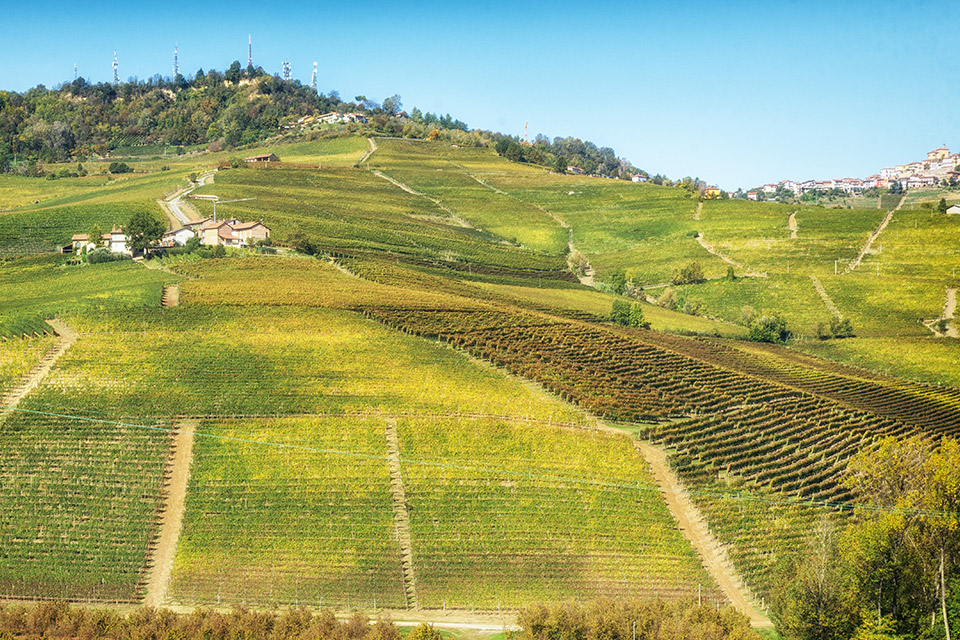
Le Strette’s vineyards cover approximately 6.5 hectares across the municipalities of Novello and, in part, Barolo. Many of them fall within officially recognized Additional Geographical Mentions (M.G.A.) of the Barolo DOCG, while others lie in areas of strong viticultural vocation, marked by historic toponyms.
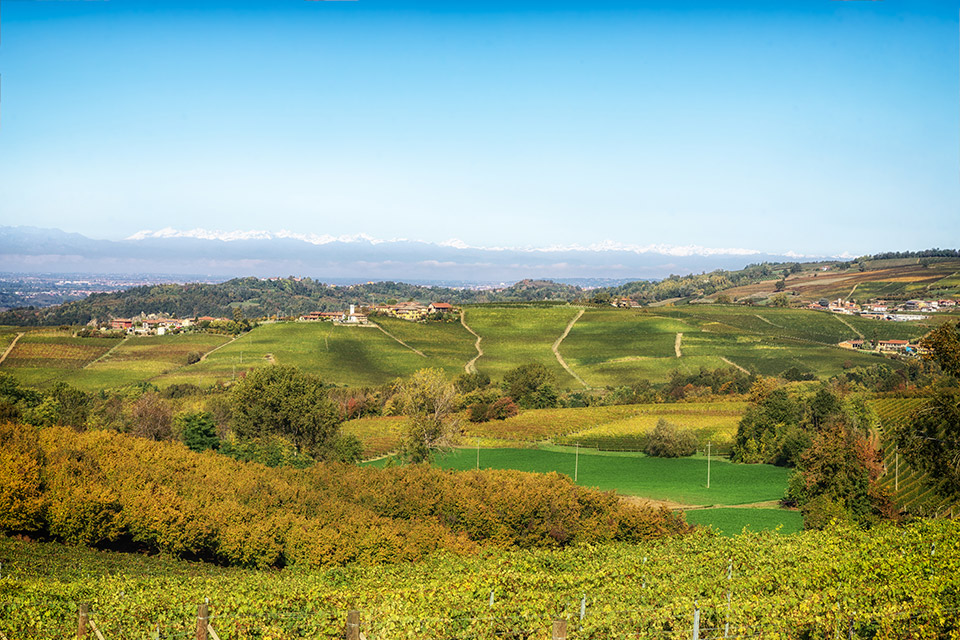
In the Municipality of Novello
Pasinotti: The vineyards planted here, on calcareous soils with southern exposure, are divided between Nebbiolo and Nas-cëtta. The latter has ancient roots on this hillside: it is home to the oldest surviving Nascetta vineyard, whose grapes have long been blended with those from other parts of Novello to create Le Strette’s Nas-cëtta del Comune di Novello.
With the PASINOT® Project, launched in 2014, Le Strette set out to highlight this historic and somewhat forgotten hill with a dedicated label, restoring vineyards in areas that had once been cultivated. One hectare of land includes a “collection vineyard” of about 750 Nas-cëtta plants, the result of meticulous massal selection carried out with Dr. Stefano Raimondi (CNR – Institute for Sustainable Plant Protection). This vineyard preserves the genetic heritage of 29 old healthy vines, selected from three different vineyards in Novello, including the oldest one (planted in 1948) on the Pasinotti hill.
M.G.A. Bergera-Pezzole The “double” name refers to the two hamlets—Bergera and Pezzole—that overlook the existing vineyards. The calcareous soil alternates between sandier and more clay-rich patches.
The vineyards here sit at 400–420 meters above sea level and enjoy excellent sun exposure. They produce a complex, austere Barolo with intriguing spicy notes, built for longevity.
In Bergera-Pezzole, Le Strette also cultivates Barbera, Dolcetto and Nas-cëtta, preserving historic Langhe vineyards that, in some cases, date back to the 1940s.
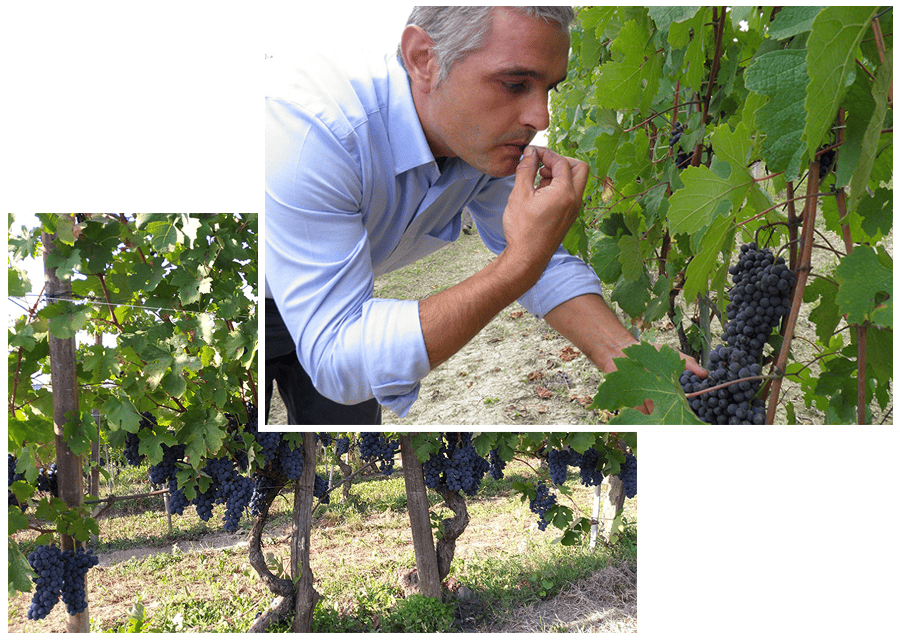
M.G.A. Corini-Pallaretta: the calcareous soil here has a slightly more pronounced clay component compared to sandy areas. The result is an intense Barolo with pleasant floral notes, structured yet fresh, and marked by a delicate acidity. A small Nas-cëtta vineyard is also cultivated here.
Tarditi: this small hamlet of Novello, at about 350 meters above sea level, is home to old vineyards (some planted in 1950) of Barbera, Dolcetto and Nascetta. Managed by Le Strette for several years, they add even more depth to the spectrum of sensations that Novello expresses through its wines.
In the Municipality of Barolo
M.G.A. Bergeisa: characterised by calcareous soil, this vineyard sits at 280 meters on a steep slope with excellent sun exposure.
These conditions allow for the production of a Barolo of remarkable elegance and finesse, yet endowed with intensity and impressive longevity.