Nascetta
Wine Nascetta
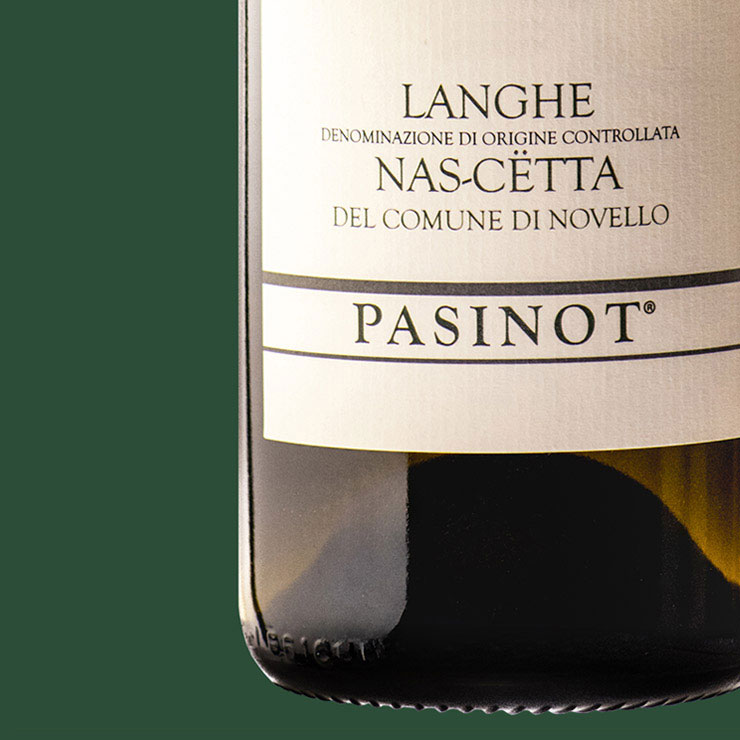
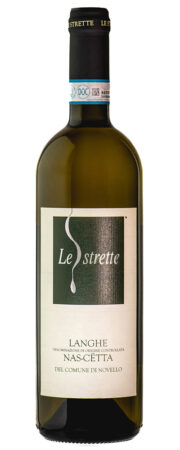
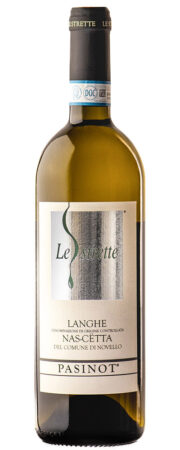
Langhe Nas-Cëtta from Novello
“Langhe Nas-cëtta is a captivating semi-aromatic DOC white wine, created as an homage to the small Langhe village that is its historical birthplace.
It is produced by vinifying in purity the grapes grown within the municipality of Novello,from the native Nascetta variety—an ancient white grape that, until a few decades ago, had nearly disappeared, surviving only in a handful of old vines scattered across the Novello hills: tiny historic parcels or isolated plants hidden among rows of noble red varieties.
The meeting between Nascetta (or Nas-cëtta, as it is traditionally called in Novello) and the Daniele brothers dates back to the late 1980s. Savio first heard about it while studying at the Enological School of Alba and, some time later, had the opportunity to taste a small, homemade Nas-cëtta wine produced by a Novello grower—who happened to be a relative of his wife. It was clear that this grape deserved trust—and a risk. And that is exactly what happened at Le Strette.
Mauro and Savio, faithful to their philosophy of honoring the territory, decided to invest heart, passion and technical expertise into what would become a defining project. Their journey began in 1997—the year the winery was founded—and reached its first milestone two years later with the release of the first 800 bottles of “Nas-cëtta – White Table Wine,” a wine considered almost “clandestine,” since the grape variety had not yet been officially registered in the National Registry of Grape Varieties.
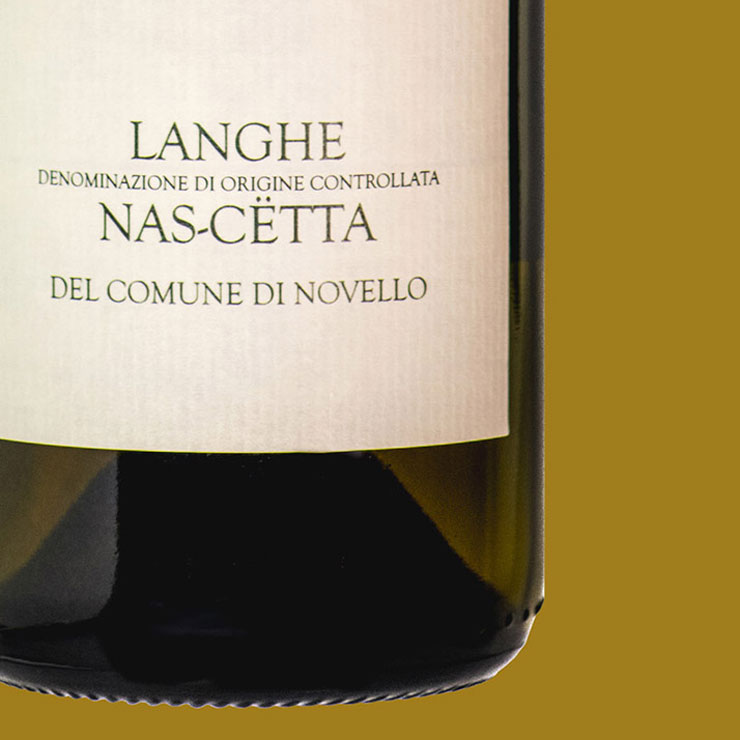
From that moment on, Le Strette never looked away from Nas-cëtta. Their dedication shaped the revival of this historic white wine, accompanying firsthand the entire bureaucratic process associated with the rediscovery and official recognition of the variety. Nascetta was entered into the National Registry in 2001, allowing the former “Table Wine” to finally become Langhe DOC.
In 2010, after nearly two decades of work in which Le Strette played a key role, the municipality of Novello was officially recognized as the historic subzone for the cultivation of this noble variety. With “Langhe Nas-cëtta del Comune di Novello,” this unique white wine could finally stand among the great wines of the Langhe.
The challenge evolved further in 2014, with the launch of the PASINOT® Project, created to enhance the historic hill of the same name in Novello—one of the traditional cradles of Nascetta.
From this initiative came the production of “Nas-cëtta del Comune di Novello PASINOT®.”
Nas-cëtta: A Name with a Touch of Mystery
The origins and meaning of the name Nas-cëtta are still uncertain today.
One historical hypothesis was proposed by the producer Giovanni Gagna of Monforte in 1873. In a note, he suggested a possible connection with the Sardinian grape Nasco, from which the name “Nascetta” might have derived. However, this theory is now considered inaccurate, as Nascetta and Nasco are clearly distinct grape varieties. In later documents, perhaps in an attempt to translate the dialect name into Italian, the article sometimes appears to merge with the name itself. The dialect form “A Nas-cëtta” (as one might say a novello, meaning “the new wine”), meaning “La Nascetta”, gradually became “Anascetta.” This interpretation was proposed by Mannini and Macaluso in 1993, and later supported by Professor Armando Gambera.
This form of the name also appears in several 19th-century sources. It was cited by Count Giuseppe Di Rovasenda in his Essay on a Universal Ampelography (1877), and by Lorenzo Fantini, a surveyor from Monforte, in the Monograph on Viticulture and Oenology in the Province of Cuneo (1879). In that work Fantini refers to the grape as Nascetta and the wine as Anascetta. The same terminology also appears in the Agrarian Monograph on the District of Alba (1883), published by the Provincial Ampelographic Commission.
However, Nascetta, Nascette, and Anascetta are not the only variants used to refer to this grape. In the List and Quality of Grape Varieties Cultivated in the Province of Cuneo (1879), Count Di Rovasenda also mentions the term “Danascette.” This name resembles that of a grape variety cited in the Fossano area in the publication The Educated Farmer – Agronomic Almanac (1787), which refers to an unidentified grape called “Darnasce.” The author, Count Giuseppe Nuvolone, simply notes that it “produces the first wine.”
It is impossible to say whether this reference already referred to Nascetta. What is certain is that the name of this variety, already cultivated before the 1870s, remains of uncertain origin.
The spelling “Nas-cëtta”, which has returned to use in recent decades and can be used only for wines produced in the historic “Comune di Novello” sub-zone, reflects a return to the Novello dialect, where the grape is pronounced with a silent “ë” and the “s” separated from the “c.”
When dealing with Nas-cëtta, nothing is ever simple… but the satisfaction is immense!