Barolo is a DOCG wine that embodies the prestige of Piedmontese winemaking—and far beyond.
Thanks to its noble origins and its two centuries of history, it has earned the title “Wine of Kings and King of Wines.” It represents one of the highest expressions of the Nebbiolo grape, which for centuries has defined the excellence of viticulture in the Langhe.
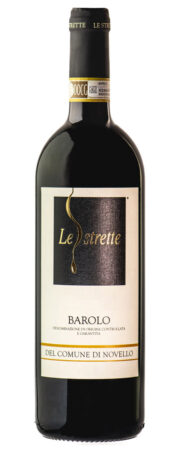
We are located just a few kilometres south of the city of Alba, in the province of Cuneo, within a restricted area that fully includes the municipalities of Barolo, Castiglione Falletto and Serralunga d’Alba, and partially those of Monforte d’Alba, La Morra, Verduno, Grinzane Cavour, Diano d’Alba, Cherasco, Roddi and, of course, Novello.
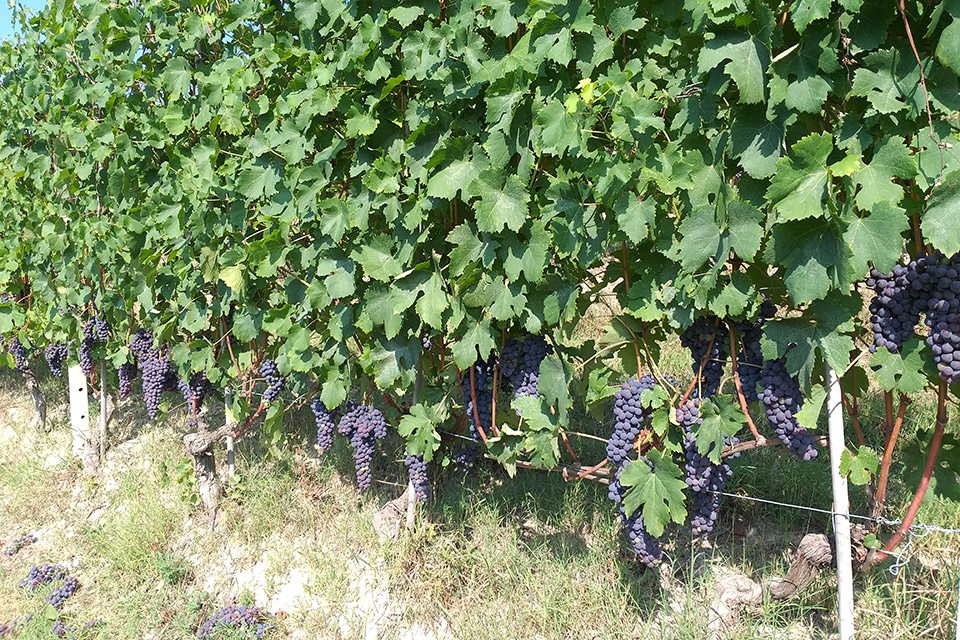
Barolo DOCG vineyards—exclusively planted with Nebbiolo—grow on hillside terrains at altitudes between 170 and 540 metres above sea level. These soils are composed of calcareous sedimentary rocks of marine origin (Marl), variously interspersed with clay and sand. Such conditions allow Nebbiolo to “interpret” its environment and give every Barolo a unique personality based on its place of origin.
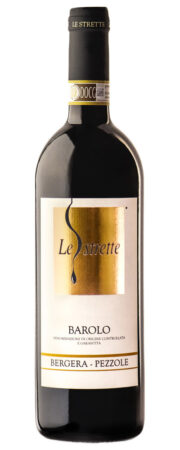
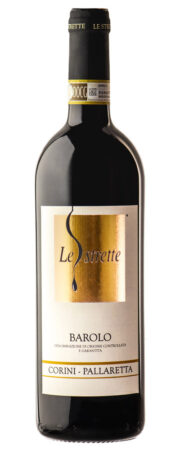
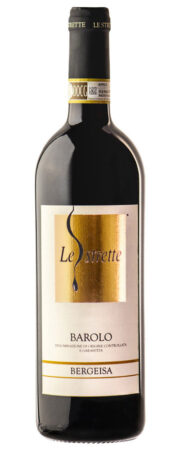
It is precisely this personality that defines each Additional Geographical Mention (M.G.A., or cru), which has always been central to Le Strette’s philosophy. The winery bottles Barolo from three different crus: Bergera-Pezzole (Novello), Corini-Pallaretta (Novello), Bergeisa (Barolo). Tasting these Barolos side by side is like taking a small journey through the Langhe, where every viewpoint offers a new emotion.
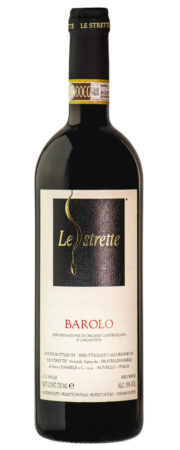
And if the characteristics of different areas are brought together—as was traditionally done—so that Barolo is crafted from a blend of Nebbiolo grapes or Barolo wines coming from various M.G.A.s, then aromas and flavours intertwine to offer a panoramic interpretation of the territory. This is the philosophy behind Barolo Classico Le Strette DOCG.
While the Nebbiolo grape has had a millennia-long connection with the hills of the Langhe, the winemaking process that gave birth to Barolo as we know it today dates back to the first half of the 19th century. At that time, several visionary members of the Piedmontese nobility recognized Nebbiolo’s potential to produce a wine of remarkable structure and longevity. Thanks in particular to the efforts of the Marchesa of Barolo, the wine soon gained recognition and appreciation at the Savoy court, and from there went on to achieve prestige in royal courts throughout Europe.
It was through the refinement of Nebbiolo vinification between 1830 and 1850 that Barolo began its rise to prominence. This work took place on the estates of Marchesa Giulia Falletti Colbert in Barolo and Serralunga, in the cellars of the Castle of Verduno, owned by King Carlo Alberto of Sardinia, and on the properties of Count Camillo Benso in Grinzane Cavour.
Significant technical contributions also came from the leading oenologists of the time, foremost among them General and oenologist Francesco Staglieno, who in 1835 published the manual “Instructions on the Best Method for Producing and Preserving Wines in Piedmont.” It was during this period that Nebbiolo began to be vinified as a dry wine. The previously common sweet, slightly sparkling wines with limited aging potential gradually gave way to richer, more austere styles. From this transformation emerged Barolo, which would go on to establish itself as a prestigious ambassador of Piedmontese wines among the world’s elite.